A SMALL START
Choose two familiar meals, one flexible meal and one easy fallback. Keep the list where you already look. This is an optional household routine for people searching for ADHD meal-planning ideas; it is not a treatment or a promise about ADHD symptoms.
Give yourself fewer dinners to choose.
A blank seven-day calendar asks you to make many decisions before you have cooked anything. Try a shorter starting point: three dinners for the next few days. Pick two you have cooked before and one that can use ingredients you already own. Leave room for an evening out, leftovers you actually have, or an easy meal.
Make a short “happy to eat again” list. Six familiar dishes are enough to begin. Write the names in the language you use at home: “beans on toast”, “pesto pasta”, “rice bowls”. A saved recipe can sit behind the name when instructions are needed. You do not have to photograph, categorise or rate every dinner before it qualifies.
Choose from that list before opening an endless recipe feed. If you want novelty, give it one slot on a day with room for learning. Repeating a meal is a valid choice. The useful question is whether you want to eat it and can make it under the conditions of that evening.
Count the work the recipe leaves out.
A recipe labelled “20 minutes” can still involve finding ingredients, washing a chopping board, locating a missing pan and cleaning up. When judging a meal, look at the number of actions and pieces of equipment as well as its cooking time. A familiar recipe with a longer unattended stage may feel more manageable than a short one needing constant attention.
Give each planned meal a plain-language effort label. “Open and assemble”, “one pan”, and “several steps” communicate more than an ambitious promise that every dinner will be quick. Put the least demanding option on the day you expect to have the least capacity.
| Slot | Dinner idea | First action | If plans change |
|---|---|---|---|
| Busy evening | Beans on toast with a side you enjoy | Put the bread by the toaster | Use the ready meal kept as a fallback |
| Ordinary evening | Familiar pasta with peas | Take out the pot and recipe | Keep unopened ingredients for another suitable day |
| More time available | A rice bowl you already know | Check the method and gather ingredients | Move the meal after checking ingredient storage and dates |
These are prompts for your own preferences, rather than a prescribed menu. Convenience ingredients can be part of the plan if they suit your budget and needs. Pre-cut vegetables, tinned pulses or a ready-to-heat dish may remove a step you otherwise avoid. Compare what you will realistically use, including the price of the pack.
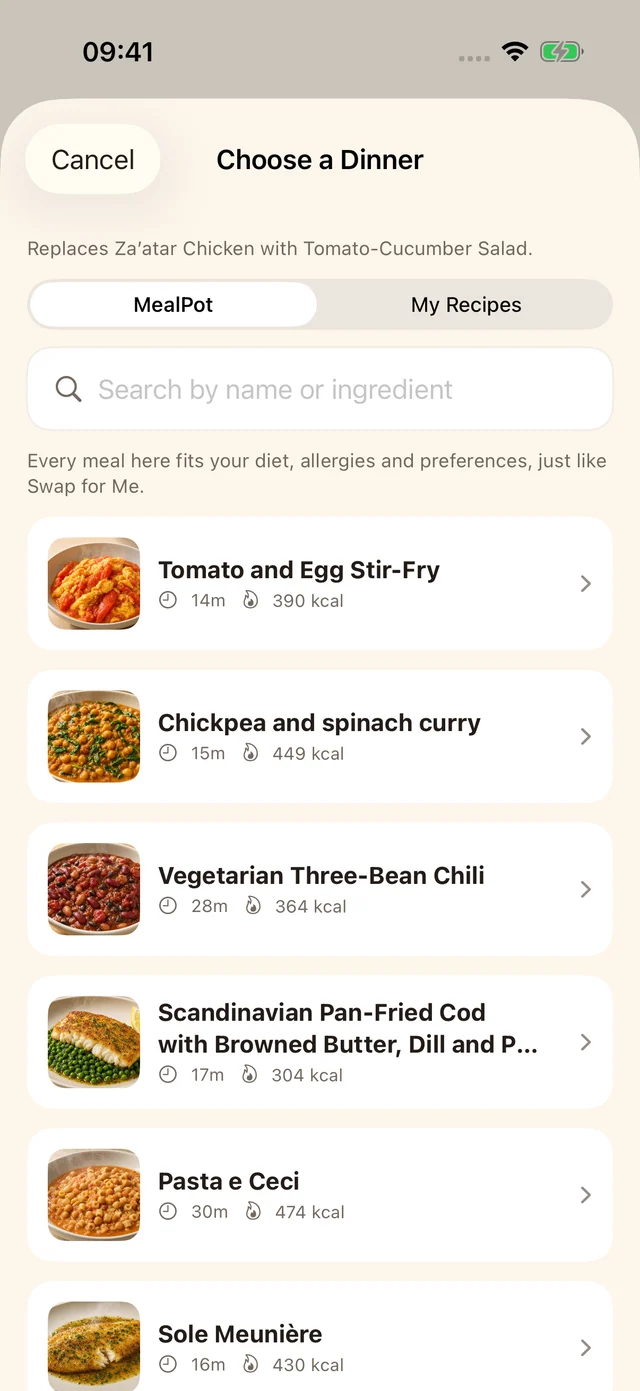
MealPot’s dinner chooser is one way to browse options. Your own short list on paper or in a familiar notes app can serve the same planning purpose.
Show the next action where it will be useful.
Put the next few meal names in one place you already check: the fridge, a shared note or the planning app you actually open. Choose one home for the current plan. A beautiful calendar hidden in a folder is hard to use at the moment you are deciding what to eat.
Beside the next meal, write one action: “take out the pasta pot” or “check the recipe before shopping”. Keep preparation reminders specific and follow the food’s storage instructions. Avoid a vague instruction such as “get organised”, which requires another decision before it becomes an action.
If another person shares the cooking, agree on ownership of the next meal. “Sam cooks pasta on Wednesday” is clearer than “we should cook more”. Put ingredient requests on the same shopping list so nobody has to reconstruct them from messages. A plan should reduce the amount of remembering passed between people.
Make the shop small enough to finish.
Before choosing new meals, look for food that already has a job waiting: an opened sauce, a half-used bag of vegetables, or the ingredients for a dinner you skipped. Build one meal around something suitable that you want to use. There is no need to inventory every cupboard to begin.
Combine ingredients for the selected meals and add breakfast, snacks and other essentials. Check the kitchen before marking pantry items as already covered. Our aisle-list example shows how to turn several recipes into one readable list without confusing cooked weights, dry weights and pack sizes.
Choose an easy fallback that you would willingly eat on a difficult evening. Make it available and give it a named place in the plan. The fallback is useful because it is already decided; it does not need to compete with a freshly researched list of “better” options at dinnertime.
Restart from what exists today.
If you skip a dinner, you do not owe the calendar a catch-up meal. Check its ingredients and storage needs, then move it, change it or remove it. If several meals were skipped, pause buying new ingredients and decide what is still appropriate to use.
At the next shop, ask three questions: what is already here, what will I reasonably cook, and what is the fallback? Keep the step that helped and remove one that created extra work. You might prefer choosing meals without assigning weekdays, or planning only the next two evenings. Either can be a workable routine.
When moving from another planner, keep your most familiar dishes accessible first. The saved-recipes-to-meal-plan guide starts with your actual week. The website’s recipe backup tool can help preserve a readable copy of a favourite; it does not require you to move an entire collection before cooking again.
Common questions
Do I need a special ADHD meal planner?
You can begin with a short list in a tool you already use. Judge a planner by the effort of setting it up and keeping it current, and whether it makes your next meal easier to find.
What if I never cook the meal assigned to a particular day?
Try an unordered list of two or three meals instead. Choose among them based on the evening and ingredient needs. Dates are useful only if they help your household.
Does this routine treat ADHD?
No. This is a practical approach to choosing dinners and shopping. It makes no medical or treatment claims and can be changed or discarded if it does not suit you.
Start with the next few meals.
Give leftover ingredients another use and keep the rest manageable.