THE USEFUL ORDER
Choose meals → set servings → combine matching ingredients → subtract usable pantry stock → choose purchase quantities → group by aisle. Doing these jobs in that order avoids rounding every recipe up to a separate pack.
Set the portions before adding anything together.
Start with the meals you intend to cook, including any portions you deliberately want for another meal. Tuesday might be dinner for two; Thursday might need four portions because two are earmarked for lunch. The number of people in your household is not automatically the serving count for every recipe.
Adjust each recipe first, then copy its ingredient amounts. If a four-serving pasta dish is becoming dinner for two, its 400 g of dry pasta becomes 200 g. Adding the original quantity to your list and trying to correct everything afterwards makes it harder to see which recipe an amount belongs to. Our serving-scaling guide walks through the calculation.
Keep a small note beside ingredients whose purpose is easy to forget: “yoghurt — sauce and breakfast” or “peppers — bowls and fajitas”. Those notes help when you remove a dinner later. Otherwise, crossing off all the yoghurt for a cancelled recipe might leave breakfast short.
Merge the same ingredient, in the same form.
You can add 200 g and 150 g of dry rice to make 350 g. You cannot reliably add 200 g of cooked rice to 150 g of dry rice as though they were identical. Similarly, fresh tomatoes, tomato purée and a tin of chopped tomatoes each do a different job. Keep the description that the cooking method needs.
Standardise straightforward units: 0.5 kg and 250 g of the same ingredient become 750 g. Leave uncertain conversions visible. If one recipe asks for two onions and another asks for 150 g, write “two onions plus 150 g” until you can make a sensible purchase choice. A precise-looking total based on an invented onion weight is less useful than an honest note.
For tins, check whether the recipe means the whole contents or the drained ingredient. A label can show both net and drained weights. The right quantity depends on what the method actually uses. Missing imported quantities deserve a look at the original recipe; a blank amount does not mean the ingredient is optional.
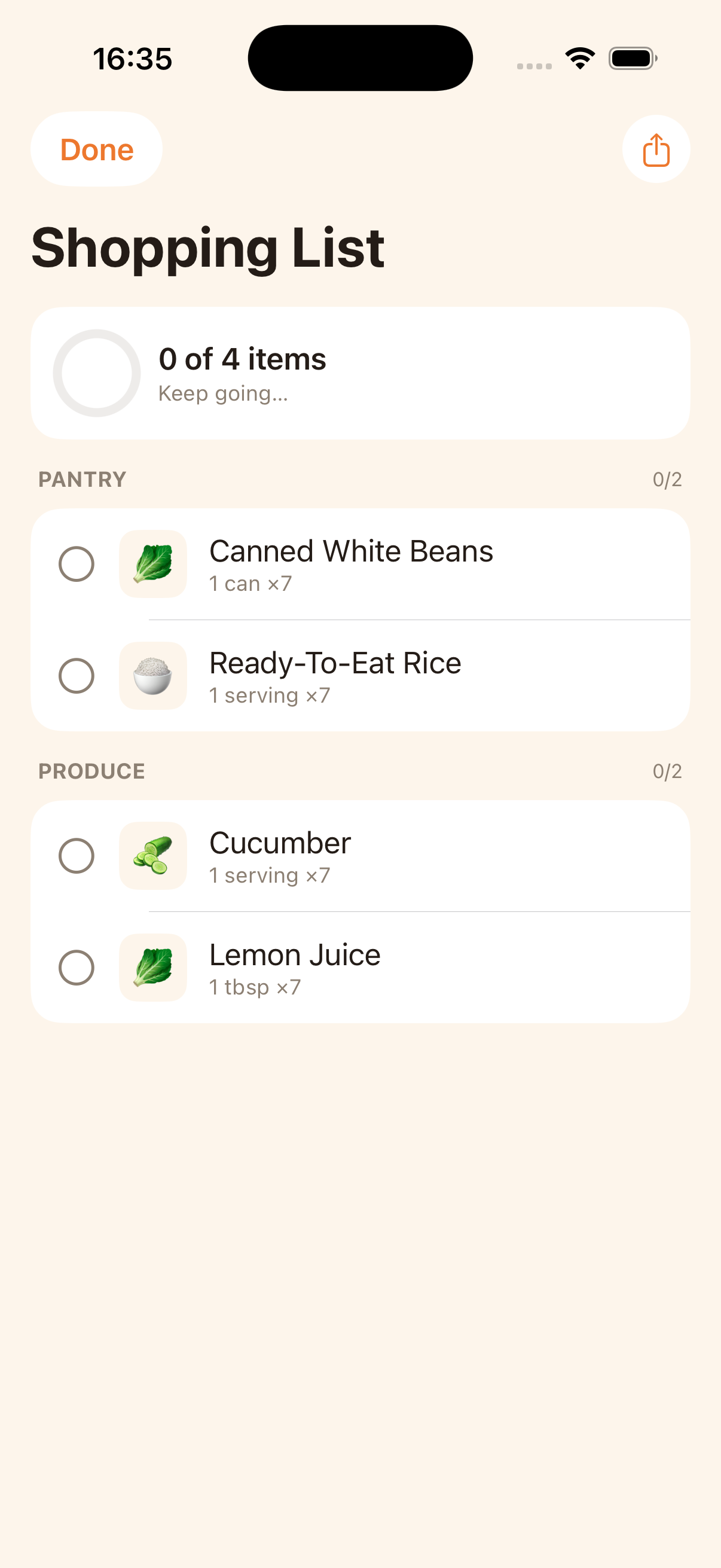
This MealPot example separates pantry and produce items. Review the amounts and descriptions before shopping; grouping alone does not resolve unclear units.
Work from recipe amount to purchase amount.
Imagine you have selected a rice bowl and a pepper skillet. After setting the portions, their combined needs are shown below. This is a shopping arithmetic example, not a complete recipe or a claim about local pack availability.
| Ingredient | Total needed | Available at home | Still to buy |
|---|---|---|---|
| Dry rice | 350 g | 200 g | At least 150 g |
| Peppers | 3 | 1 usable pepper | 2 peppers |
| Chickpeas | 240 g drained | None | Enough for 240 g drained |
| Plain yoghurt | 200 g | 50 g reserved for this plan | At least 150 g |
| Lemon | 1 | 1 | None |
“Available at home” means available for these meals. If someone has already counted the yoghurt towards breakfast, do not subtract it twice. Check the actual packet rather than relying on a memory of buying it last week.
The final purchase might be a 500 g bag of rice because that is what your shop sells. Keep “need 150 g” alongside that purchase so you remember that the remaining 350 g is stock for later. See how to plan around pack sizes for the difference between ingredient cost and money spent at checkout.
Use groups that match your own shop.
A sensible starting order is produce; bakery; tins and dry goods; chilled food; household items; frozen food. Your shop may put bread at the back or household products upstairs. Move the groups to match the route you actually take, keeping chilled and frozen purchases practical for the journey home.
Place items by where they are sold, rather than their nutritional category. Tinned beans belong with tins. Frozen spinach belongs with frozen food. If a substitute is acceptable, write it on the same line: “spinach, fresh or frozen as suitable for the recipe”. Avoid creating two unchecked entries that look like two separate purchases.
Keep breakfast, snacks, drinks and household supplies on the same master list, in their appropriate groups. A dinner planner cannot know that you have run out of washing-up liquid. A short recurring extras check prevents the weekly food shop from being complete only on paper.
Do one final pass before leaving.
- Confirm the meals and serving counts still fit your week.
- Inspect cupboard, fridge and freezer amounts, including ingredients reserved for something else.
- Resolve unclear units and mark any essential brand, dietary or product requirements.
- Remove duplicates and note acceptable substitutions before someone else shops.
- Keep one current list, with a clear way to mark purchases complete.
If two people are shopping separately, assign items or groups before setting off. If the list is on paper, agree which copy is current. If it is digital, check that both people are looking at the latest version. The useful habit is shared clarity, whichever tool you use.
Common questions
Can I use a Mealime grocery list at another supermarket?
A readable ingredient list can travel with you to any shop. Product links and online checkout availability are separate. Check quantities, pack sizes and substitutions in the shop you choose.
Should I always remove pantry staples?
Only after checking that you have enough available for the plan. Salt, oil and rice still run out. Keep an uncertain item marked “check” until you have inspected it.
What happens if I cancel a planned meal?
Subtract that recipe’s contribution before revising purchases. Keep any quantity needed by another meal, and decide what to do with ingredients already bought.
Make the list follow the week.
Build a manageable meal plan or take it to your preferred shop.