Read the equipment list before buying a set
A kitchen-essentials list is most useful when it is connected to what you cook. Start with three or four regular meals and note the tools each one needs. The items that appear repeatedly deserve attention before a specialist gadget mentioned in one ambitious recipe.
Mealime publishes its own kitchen equipment guide. This page uses a different approach: a practical inventory exercise rather than a product-ranking list. We are not repeating its endorsements or claiming to have tested the products it recommends.
Check the tools already in the kitchen
For preparation, identify a suitable board, a knife you can use comfortably, measuring tools and a bowl. For cooking, look at the pan or pot called for by your regular recipes and any oven tray you use. For serving and storage, count the containers you actually need for the portions you plan.
Condition and suitability matter more than owning a matching set. A damaged tool, an unstable handle or a pan that cannot be used on your hob needs attention. Follow the manufacturer’s care and use guidance; a recipe’s generic equipment name does not establish whether a particular item is oven-safe.
Pan capacity is part of serving changes
A recipe scaled from two to six portions may no longer fit the same pan. Crowding can change how the food cooks, even when the ingredient arithmetic is correct. Review the vessel size and the method before increasing a recipe for guests or lunches.
When comparing recipe backups, keep useful cookware information beside the ingredients and steps. If it is absent from the extracted data, make a note from the original. A complete-looking shopping list does not tell you whether the recipe needs a large baking dish you do not own.
Check what needs to be used at the same time
Read the recipe as a sequence of equipment uses. If the sauce needs the only saucepan while another component is already simmering in it, decide whether the method gives you a sensible way to work in stages. Two recipes can each seem simple but compete for the same hob space when cooked together.
Make a short note beside the plan: one pan for the main dish, one for the side, and a bowl for mixing. Include the place where prepared ingredients will wait. This is especially useful when preparing extra portions or cooking with another person in a small kitchen.
After cooking, note the tool that actually saved effort and anything that stayed in the cupboard. That record helps you distinguish a recurring need from a purchase prompted by one appealing photograph.
Match equipment to a realistic week
Imagine your next three dinners require one saucepan, a frying pan, a board, a knife and a colander. That gives you a concrete starting inventory. If one new recipe adds a blender, consider whether you will use it again or whether another meal fits the equipment you already have.
This is not a rule against buying tools. It is a way to connect a purchase to a real use. Think about where the item will be stored, whether it is easy to clean and whether its capacity fits your household before comparing brands or adding it to a basket.
Review equipment when choosing MealPot recipes
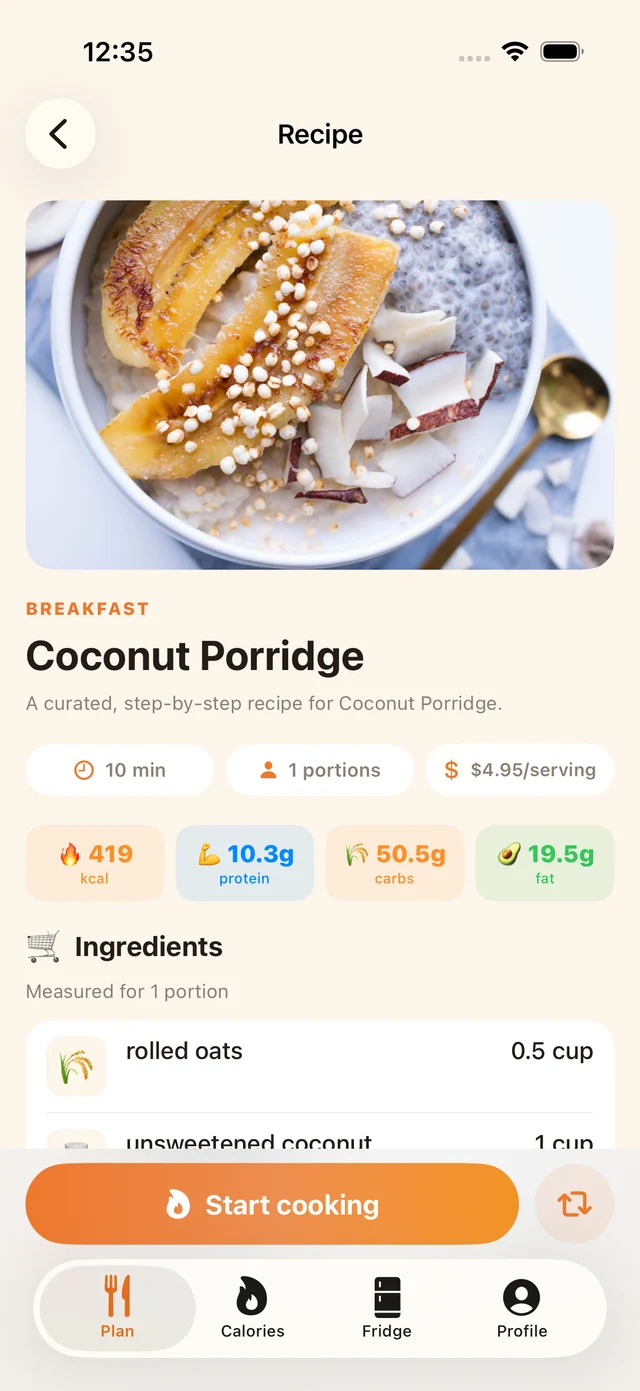
Open the recipe you intend to cook and check the method for equipment and preparation requirements. If a linked import lacks a cookware list, read the source and keep a note. The website backup should be checked for the information you need, not treated as a guarantee that every source field has been copied.
Before building a large plan, choose one dinner you can cook with the tools already available. The cooking-view guide helps you test the screen alongside the kitchen setup, and the serving guide explains why changing portions involves more than changing the timer.
Frequently asked questions
Do I need every item on a kitchen essentials list?
Start with the recipes you regularly cook and the equipment they require. A generic product list does not know your household or storage space.
Does doubling servings mean using the same pan for longer?
Not necessarily. Pan capacity and the cooking method matter. Review the recipe and equipment before scaling.